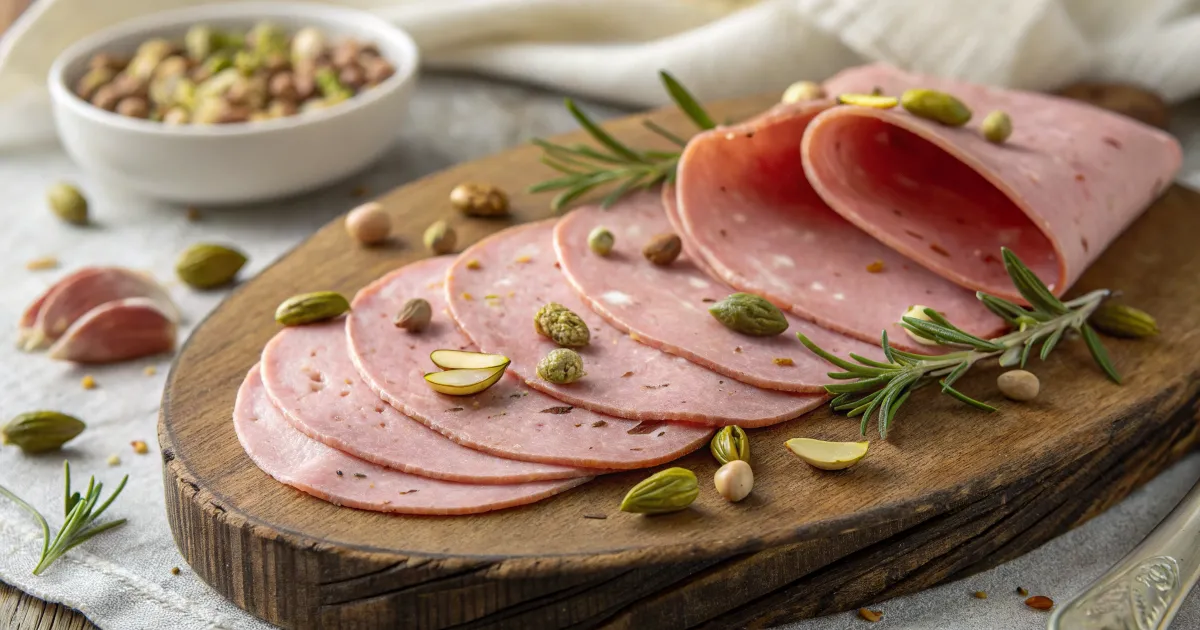
Mortadella, the delicately spiced Italian cold cut, showcases Italy’s culinary mastery. Unlike American bologna, mortadella is smooth and rich. Its texture and flavors come from careful preparation. But who makes mortadella lunch meat recipe, and what makes it exceptional? This guide dives into its origins, traditional techniques, and practical tips for making it at home.
Whether you’re curious about its history or eager to recreate it, you’ll find valuable insights and tips here.
Table of Contents
What is Mortadella Lunch Meat Recipe Made Of?
At first glance, mortadella may seem like a simple cured meat, but its composition is both intricate and essential to its rich, satisfying taste. The ingredients in mortadella are more than just components—they are the key to its luxurious texture and flavor.
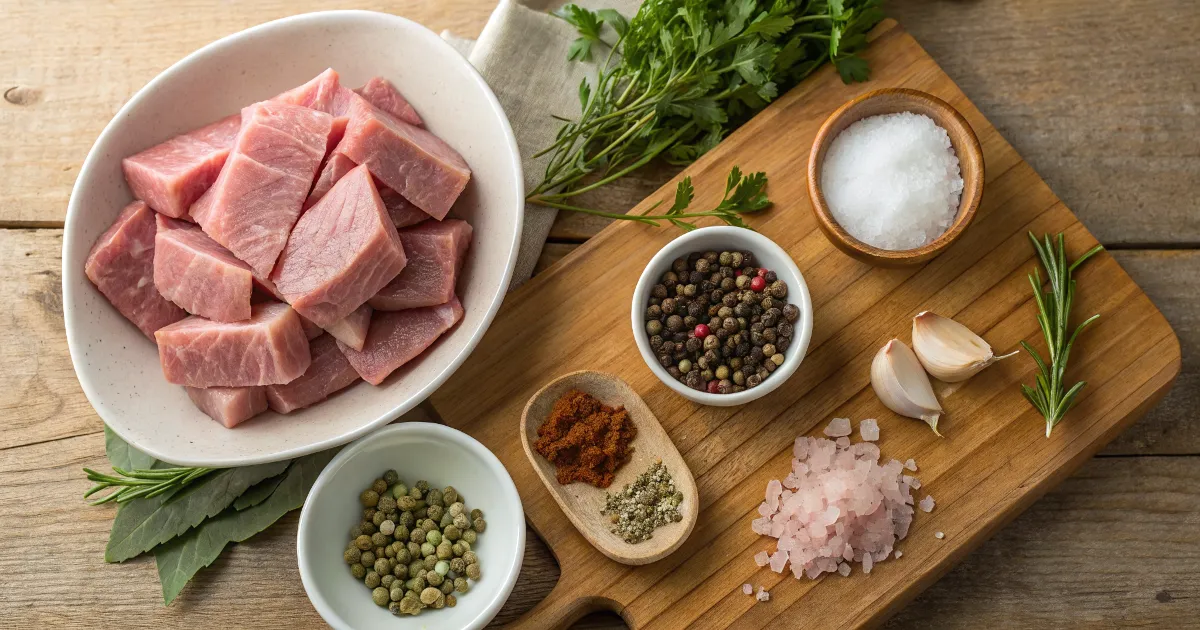
- Pork Shoulder: Authentic mortadella starts with pork shoulder. This cut is valued for its balance of lean meat and fat. It is finely ground and emulsified to create the sausage’s smooth texture.
- Pork Fat Cubes: Mortadella is known for its white pork fat cubes. These cubes, called lardelli, soften during cooking. They give the sausage a rich, creamy texture.
- Seasonings and Spices: Mortadella gets its flavor from garlic, white pepper, nutmeg, and coriander. These spices give it a warm, aromatic taste. Pistachios are often added for a sweet, nutty hint.
Some gourmet versions take the recipe to the next level. They include fancy additions like black truffle shavings or myrtle berries.
Tip: Authentic mortadella is made with pork. But modern versions can use beef or chicken. This allows for dietary flexibility without losing flavor.
How is Mortadella Made? Step-by-Step Process
Making mortadella is a careful process. It involves precise emulsification, proper seasoning, and slow cooking. This creates its unique texture and flavor. Here’s a step-by-step guide to its preparation:
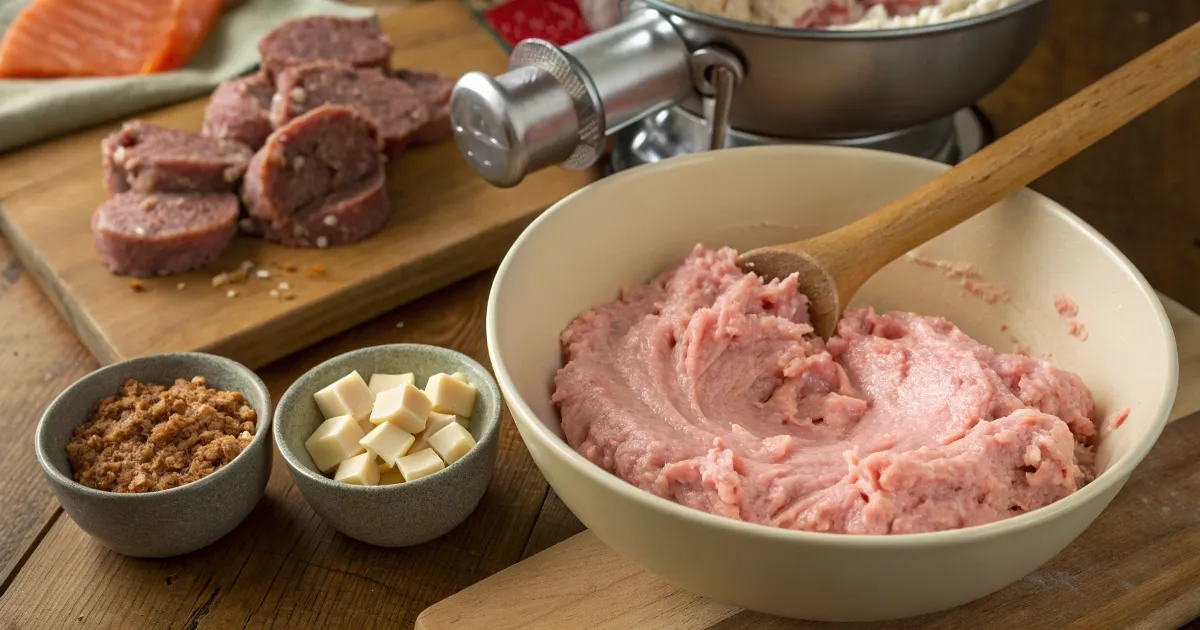
- Grinding the Meat: The process starts by finely grinding pork shoulder and fat. The finer the grind, the smoother the texture of the final product.
- Emulsifying the Mixture: Ice water is gradually added to the ground meat to emulsify the protein and fat. This step is critical to achieving the silky texture mortadella is known for.
- Blending with Spices: Garlic, white pepper, nutmeg, and curing salt are carefully mixed into the meat. The curing salt not only preserves the sausage but also enhances its characteristic flavor.
- Stuffing the Casings: The seasoned mix is packed into large casings. These casings are usually made of beef or synthetic materials and tied tightly to hold their shape.
- Slow Cooking: The sausages are cooked at low temperatures for 6-8 hours. Steam or water baths are commonly used to ensure even cooking without drying out the meat.
- Cooling and Resting: After cooking, the mortadella is cooled gradually and left to rest, allowing the flavors to meld perfectly.
Pro Tip: Ensure the meat mixture is well emulsified to prevent the fat from separating during cooking, which could result in a grainy texture.
To learn creative ways to serve mortadella as part of a balanced lunch, check out this charcuterie board lunch guide.
Why is Mortadella So Expensive?
Mortadella is known as a premium deli meat because of its skilled craftsmanship and quality ingredients. It may cost more than other lunch meats, but the process behind it explains the price.
- Use of Premium Ingredients: Mortadella is made with top-quality pork and authentic seasonings. It often includes gourmet touches like pistachios or truffles.
- Labor-Intensive Production: Each step, from emulsifying the meat to slow cooking, requires precision. Even small changes can affect the texture or flavor.
- Protected Designation of Origin (PDO): Mortadella di Bologna is a PDO product. It must be made in Bologna, Italy, following strict rules. This regional exclusivity increases its value and cost.
Did You Know? Artisanal producers often age mortadella for weeks to boost its flavor. This aging process makes it more expensive than mass-produced versions.
What is Considered the Best Mortadella in the World?
Mortadella di Bologna, a PDO-certified product, is widely regarded as the best.
- Flavor Profile: Mortadella di Bologna has a refined taste with notes of nutmeg, garlic, and black pepper. Its velvety texture melts in the mouth, leaving behind a mildly sweet finish.
- Strict Quality Standards: The PDO certification ensures top-quality pork and traditional production methods.
- Gourmet Variations: Some versions include pistachios or aged cheeses like Parmigiano-Reggiano.
Tip for Buyers: look for the PDO label to ensure authenticity.
For more recipe ideas using flavorful ground pork, try these ground sausage recipes.
Ingredients and Instructions for a Homemade Mortadella Lunch Meat Recipe
If you want to recreate this Italian delicacy at home, here’s a detailed recipe to help you achieve authentic results.
Ingredients Table:
| Ingredient | Amount | Notes |
|---|---|---|
| Pork shoulder | 2 lbs | Choose a well-marbled cut |
| Pork back fat | 0.5 lb | Adds richness and smoothness |
| Garlic powder | 1 tsp | Adjust based on taste preference |
| White pepper | 1 tsp | Adds warmth and spice |
| Pistachios (optional) | 0.5 cup | For a nutty, earthy flavor |
| Curing salt | 1 tsp | Preserves color and flavor |
| Ice water | 0.5 cup | Aids in emulsification |
Step-by-Step Instructions:
- Grind the Meat: Start by grinding the pork shoulder and fat using a fine grinder setting.
- Blend the Mixture: Add garlic powder, white pepper, curing salt, and ice water. Mix thoroughly until the texture is smooth and emulsified.
- Add Pistachios: Fold in the pistachios or any other add-ins, such as black peppercorns or truffles.
- Stuff the Casings: Use a sausage stuffer to fill the casings, ensuring there are no air pockets.
- Cook Slowly: Steam or boil the mortadella at a low temperature (170°F) for 6-8 hours.
- Cool and Rest: Let the mortadella cool before slicing it into thin, flavorful rounds.
Why Was Mortadella Banned in the US?
In the 1960s, the USDA banned imported mortadella due to concerns about European curing and contamination. Meat import regulations were less advanced back then than they are today.
With better food safety measures, the ban was lifted in the early 2000s. This allowed Americans to enjoy the delicacy again.
How to Make Mortadella Lunch Meat Recipe (Continued)
In the first half of the article, we covered the early steps of making mortadella. This included preparing the ingredients, emulsifying the meat, and stuffing it into casings. Now, we’ll dive deeper into the essential steps of cooking, resting, and serving this Italian classic. Let’s complete the process and explore how you can perfect this homemade delicacy.
Cooking the Mortadella to Perfection
Cooking mortadella properly is critical to achieving its smooth, luxurious texture. Unlike other sausages, it requires slow and even heating to preserve its emulsion of meat and fat without causing separation.
- Ideal Cooking Method: The traditional method involves steaming the stuffed sausage at a low temperature. You can use a large pot with a steamer basket or a specialized sausage steamer.
- Temperature Control: Maintain the water temperature between 170°F and 185°F. This slow cooking prevents the fat from rendering out and ensures the meat mixture stays emulsified.
- Cooking Time: The process typically takes 6-8 hours, depending on the size of the mortadella. Smaller sausages may cook faster, but larger ones need the full time to develop their signature texture and flavor.
Tip: Always monitor the internal temperature of the sausage using a meat thermometer. Once it reaches 155°F, the mortadella is ready to be cooled.
Cooling and Resting the Mortadella
Cooling the mortadella properly is just as important as cooking it. This step allows the fat to solidify, ensuring each slice retains its structure and offers a melt-in-your-mouth experience.
- Ice Bath Cooling: Immediately after cooking, transfer the sausage to an ice water bath. This rapid cooling prevents overcooking and locks in moisture.
- Resting Period: Once the sausage has cooled completely, wrap it tightly in butcher paper or plastic wrap and refrigerate it for at least 24 hours. The resting period helps the flavors intensify and allows the sausage to firm up for easier slicing.
Slicing and Serving the Mortadella
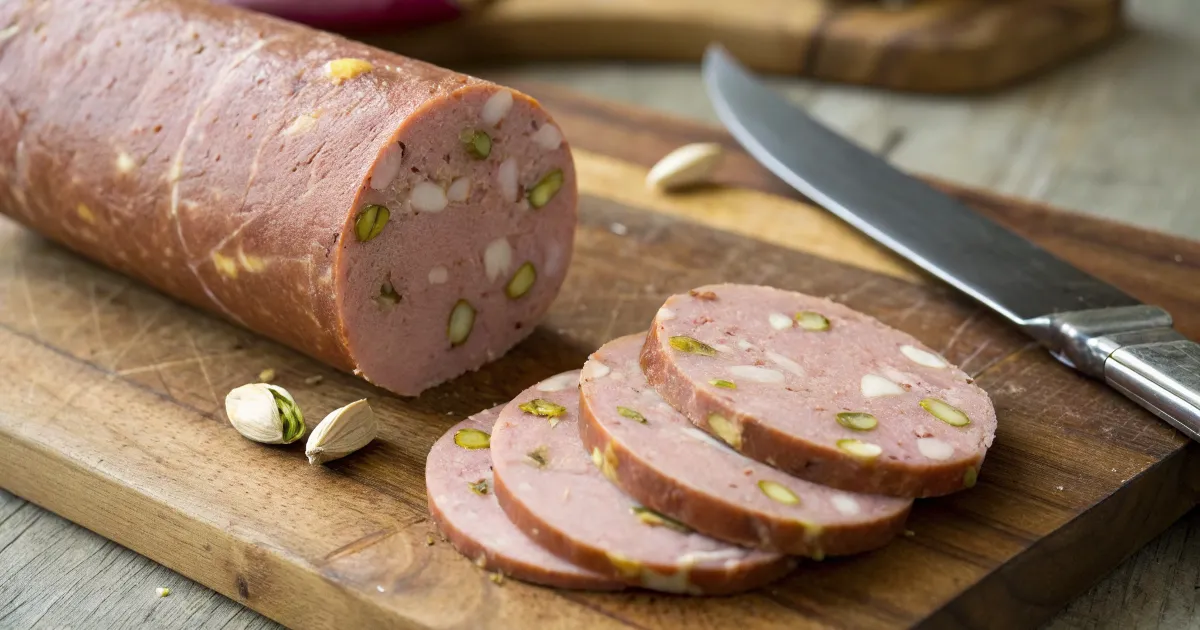
When slicing mortadella, it’s important to achieve thin, even slices to showcase its marbled texture and enhance its flavor.
- Best Tools for Slicing: Use a sharp knife or a meat slicer for precision. A meat slicer ensures consistent, wafer-thin slices, ideal for sandwiches and charcuterie boards.
- Serving Suggestions: Mortadella can be enjoyed in many ways, from classic Italian sandwiches to gourmet appetizers.
For more ideas on how to serve mortadella as part of a luxurious meal, check out this dinner party recipe book.
Pro Tips & Variations for Perfect Mortadella
While the traditional recipe is delicious on its own, there are plenty of ways to customize your mortadella to suit your taste or dietary needs. Experimenting with different seasonings, gourmet add-ins, or even alternative meats can elevate this Italian classic.
1. Experiment with Different Seasonings
Traditional mortadella relies on garlic, nutmeg, and white pepper for its distinct flavor, but you can easily modify the spice blend for a personalized twist.
- For a Bold Flavor: Add crushed red pepper flakes or chili powder for a spicy version.
- For a Citrus Note: Incorporate lemon zest or orange peel to balance the richness of the pork.
- For an Herbal Touch: Blend in fresh rosemary or thyme to create an earthy undertone.
2. Try Gourmet Additions
Adding premium ingredients can take your mortadella from traditional to gourmet.
- Pistachios: Already a staple in many traditional recipes, pistachios add a nutty, slightly sweet flavor that complements the savory meat.
- Black Truffles: For an indulgent upgrade, mix finely shaved black truffles into the meat before stuffing it into casings.
- Aged Parmesan or Pecorino: Cheese lovers can add small cubes of aged Parmesan or Pecorino for an extra layer of umami.
Tip: Keep the balance of flavors in mind when adding new ingredients. Overpowering the sausage with too many strong flavors can detract from its delicate profile.
3. Use Alternative Meats
Pork is the classic choice for mortadella, but it’s not the only option. You can easily create variations using other meats to accommodate dietary preferences.
- Beef Mortadella: This variation offers a leaner, slightly milder flavor. Use high-quality ground beef with a good fat content for the best results.
- Chicken or Turkey: These leaner options are ideal for those seeking a lighter version. However, be sure to add enough fat (such as chicken skin or turkey fat) to maintain the signature texture.
Looking for more creative ways to use flavorful meats? Don’t miss this pepper lunch recipe for a spicy twist on lunchtime favorites.
FAQs About Mortadella
Here are answers to common questions about mortadella, including its history, ingredients, and culinary uses.
What is mortadella lunch meat recipe made of?
Mortadella consists of finely ground pork, pork fat cubes, garlic, white pepper, and nutmeg. Some traditional recipes also include pistachios or black peppercorns for added texture. The key to its smooth texture lies in emulsifying the meat mixture and cooking it slowly.
Why is mortadella so expensive?
Several factors contribute to the higher price of mortadella compared to other lunch meats:
- High-Quality Ingredients: Authentic mortadella uses premium cuts of pork and gourmet additions like pistachios and black truffles.
- Labor-Intensive Production: The process requires careful emulsification, stuffing, and long hours of slow cooking.
- PDO Certification: Mortadella di Bologna, the gold standard, is PDO-certified, which ensures it meets strict quality standards and is produced in specific regions of Italy.
Why was mortadella banned in the US?
In the 1960s, the US banned mortadella temporarily over food safety and contamination risks during curing. With improved regulations and inspections, the ban was lifted, and it’s now easily found in specialty stores nationwide.
What is considered the best mortadella?
Mortadella di Bologna is widely regarded as the best version of this sausage. Its PDO certification guarantees that it’s made in Bologna, Italy, using traditional methods and the highest quality ingredients. The result is a rich, flavorful product with a velvety texture.
How can I serve mortadella?
Mortadella is incredibly versatile. Here are a few popular ways to enjoy it:
- Classic Italian Sandwich: Layer thin slices of mortadella with provolone cheese, arugula, and a drizzle of olive oil on crusty bread.
- On a Charcuterie Board: Pair mortadella with cheeses, cured meats, olives, and fresh bread for a gourmet appetizer.
- As a Pizza Topping: Add diced mortadella to your pizza for a salty, savory twist.
Conclusion
Mortadella is more than a lunch meat—it’s a key part of Italy’s culinary heritage. Its rich history, smooth texture, and versatile flavors make it a global favorite. Whether you stick to a traditional recipe or try a gourmet version, this classic Italian sausage brings authentic taste to any table.